Fungal Alpha-Amylase in Flour and Dough Systems
Fungal Alpha-Amylase in Flour and Dough Systems
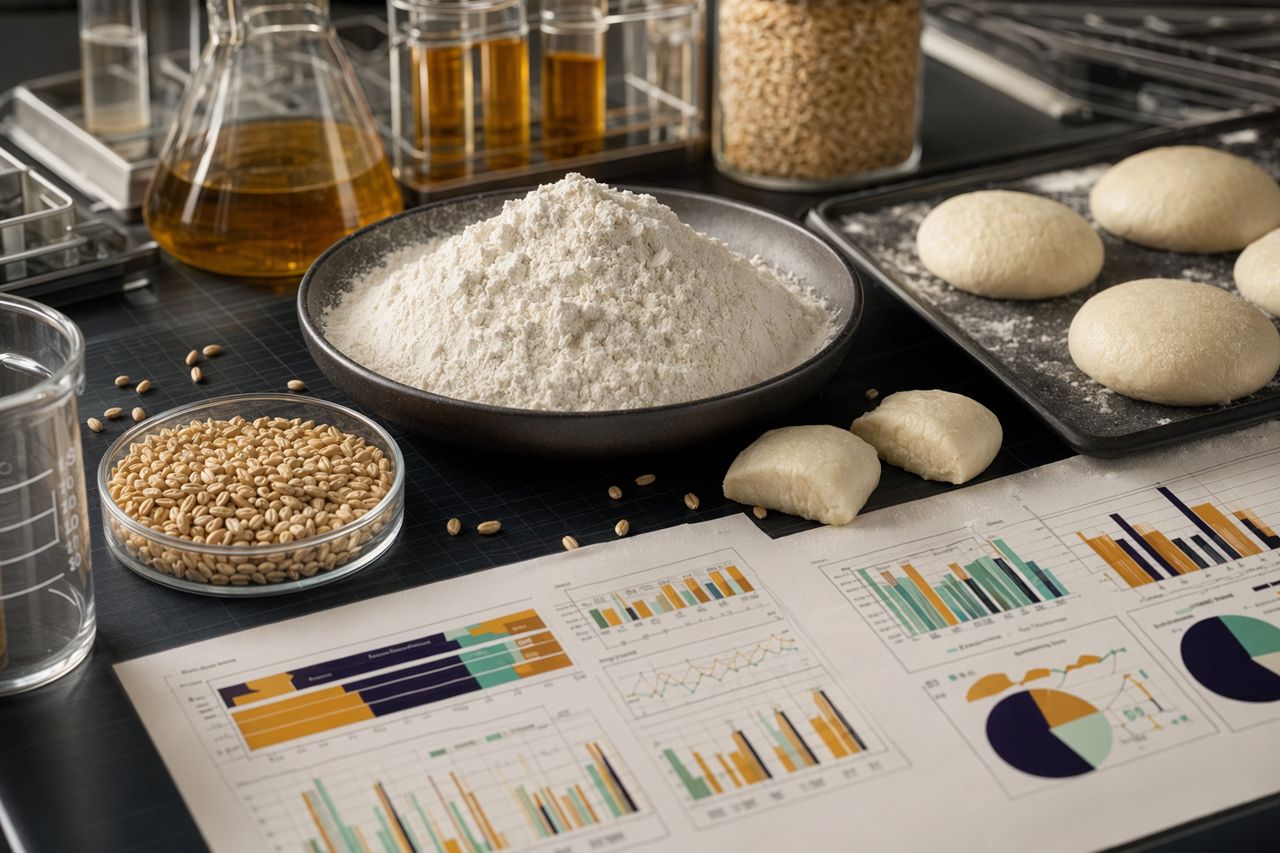
Flour changes from crop to crop, mill to mill, and shipment to shipment. Fungal Alpha-Amylase helps production teams correct that variation by converting part of the starch fraction into smaller dextrins and fermentable sugars during dough development, proof, and the early bake phase.
In practical bakery terms, it supports yeast activity, oven spring, crust color, and crumb eating quality. Used correctly, it is a controlled flour-correction tool rather than a blunt sweetening or softening additive.
Fungal Alpha-Amylase Solutions supplies fungal alpha-amylase in bulk to flour mills, improver and premix manufacturers, industrial bakeries and the distributors who serve them. Every order is quoted individually.
Wholesale and bulk supply for manufacturers, distributors and resellers. Every fungal alpha-amylase order is quoted individually. Request a quote with the application, the quantity you need and the destination country.
What Fungal Alpha-Amylase does in dough
Fungal Alpha-Amylase acts on starch, especially damaged starch made available during milling and hydration. It breaks internal starch linkages to produce shorter carbohydrates that yeast and browning reactions can use.
For baking teams, that translates into four main effects:
- More consistent fermentation: improved availability of fermentable substrate when native flour enzyme activity is low.
- Better loaf volume and oven response: stronger gas production and expansion during proof and early baking.
- Improved crust color: more reducing sugars available for Maillard browning.
- Softer crumb profile: controlled dextrin formation can support a more resilient crumb and delay perceived dryness.
The key word is controlled. Too little may not correct a weak flour. Too much can create sticky dough, excessive browning, gummy crumb, or slicing issues.
Where it fits best
Fungal Alpha-Amylase is commonly evaluated in wheat-based systems where flour consistency and fermentation predictability matter.
Strong application fit
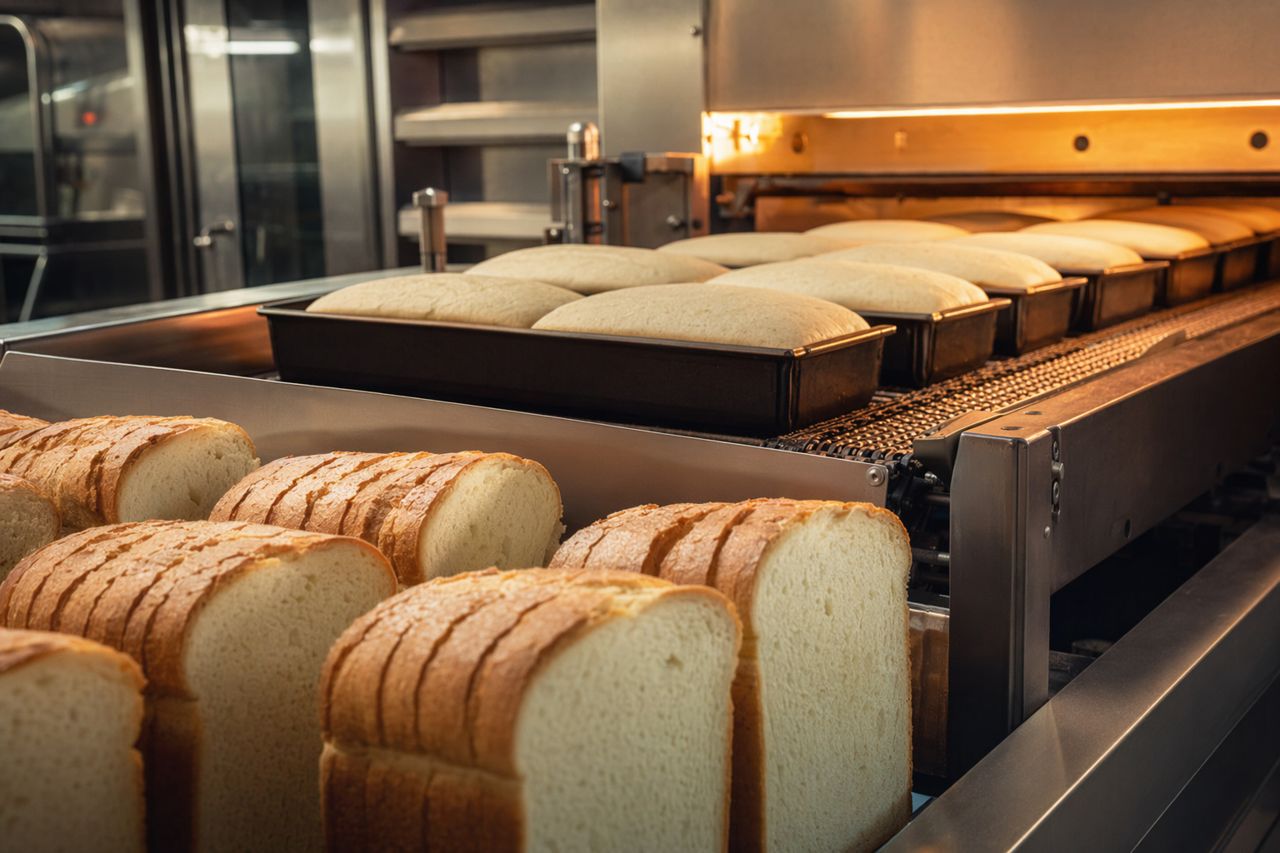
- Pan bread and sandwich bread
- Buns, rolls, and soft bread systems
- Pizza bases and fermented flatbreads
- Sweet doughs where yeast performance needs support
- Flour treatment for low-enzyme or variable wheat lots
- Bakery premixes and improver systems
Use with extra care
- High wholegrain or bran-rich formulas with variable water absorption
- High-sugar or high-fat doughs that slow hydration and yeast activity
- Long fermentation processes where enzyme exposure time increases
- Frozen dough systems, where proof behavior after thawing must be validated
- Formulas already containing multiple amylase sources
Fungal Alpha-Amylase versus other amylases
Not all amylases behave the same way in baked goods.
Fungal Alpha-Amylase is valued for flour correction, fermentation support, crust color, and loaf volume. It is typically less heat-stable than bacterial liquefying amylases, which can be useful in bread because its action naturally declines as the loaf heats.
Maltogenic amylase is usually selected when the main objective is anti-staling and shelf-life softness.
Bacterial alpha-amylase can be powerful and heat-tolerant, but in bread systems it requires careful control because excessive residual activity may increase gumminess.
For most flour and dough correction work, Fungal Alpha-Amylase is chosen because it is practical, familiar to bakery operations, and compatible with standard improver design.
Performance window in bakery processing
Fungal Alpha-Amylase performs through the hydrated dough phase and into the early oven stage. Its contribution depends on flour damage level, water absorption, dough temperature, fermentation time, pH, yeast level, and the presence of oxidants, emulsifiers, fibers, sugars, and fats.
In typical wheat doughs, it is most useful when the process allows enough time for starch access and sugar generation before the enzyme is denatured by baking heat.
Process factors that change the result
- Flour damaged starch: more available substrate generally increases enzyme response.
- Water absorption: under-hydrated dough limits enzyme mobility.
- Fermentation time: longer exposure can amplify both benefits and overdose symptoms.
- Yeast level: amylase supports yeast, but it does not replace fermentation balance.
- Sugar and fat: enriched systems often need separate validation because hydration and yeast activity are slower.
- Bake profile: color and crumb effects depend on how quickly the loaf structure sets.
Trial design for flour correction
A useful bakery trial should compare the enzyme against a clear control, not against memory or previous production runs.
Recommended evaluation structure
- Select a representative flour lot and record its current quality profile.
- Run a no-enzyme control under normal process conditions.
- Test a low, medium, and high inclusion level based on supplier guidance.
- Hold yeast, water, mixing, proof, and bake conditions constant.
- Measure dough handling, proof height, oven spring, loaf volume, crust color, crumb cell structure, softness, and slicing behavior.
- Repeat on a second flour lot before approving routine use.
Signs the inclusion level is too low
- Pale crust at normal bake
- Slow proof or inconsistent lift
- Tight crumb structure
- Lower finished volume
- Dry eating quality early in shelf life
Signs the inclusion level is too high
- Sticky or slack dough
- Excessive proof speed
- Overly dark crust
- Gummy or wet crumb perception
- Slicing smear or compression
- Irregular cell structure
The best setting is usually the lowest level that delivers reliable correction across expected flour variation.
Reading an improver: what the enzymes do and what the emulsifiers do
In a bread improver, the enzymes change structure. They act on starch and protein, which is where dough strength, fermentation and staling are decided. The emulsifiers bind water and fat together, stabilise gas cells and give a finer, softer crumb. They are not alternatives: a working improver usually combines both, each with its own job.
| Problem on the line | Enzyme side | Emulsifier side |
|---|---|---|
| Small loaf volume and fast staling | Fungal alpha-amylase with xylanase | SSL or DATEM with monoglycerides |
For a mill, a blender or a reseller, the ingredient list shows what an improver is built for:
- Fungal alpha-amylase and xylanase listed: aimed at bread volume, gluten network and slower staling.
- Monoglycerides, SSL or DATEM listed: aimed at volume and softness.
- Enzymes only, no emulsifier: limited effect on fine crumb and moisture retention.
- Emulsifiers only, no enzyme: limited effect on staling.
- A label that only says “improver”, or a long list that never says what each part does: ask before you buy.
Of the two, the enzymes need the more precise dose. Too little shows no effect; too much gives soft dough with no strength, loaves that collapse and cakes that shrink back. Emulsifiers are more forgiving. That is why the enzyme share of an improver is matched to the flour, the product and the process rather than fixed once, and why bread and cake lines are usually better served by separate improvers than by one product for both.
Formulation compatibility
Fungal Alpha-Amylase is often used alongside standard bakery improver components. Compatibility should be confirmed in the final formula because enzyme response is formula-dependent.
Common companion ingredients include:
- Ascorbic acid or other dough-strengthening systems
- Emulsifiers for volume and crumb tolerance
- Xylanase or hemicellulase systems for dough handling
- Protease in applications requiring dough extensibility
- Yeast nutrients and fermentation aids
- Malt flour or malt extract, where additional amylase contribution must be considered
If malt flour, active malt, or another amylase is already present, total amylase activity in the formula should be reviewed before increasing dosage.
Procurement and quality questions to ask
For production use, the enzyme should fit both the technical application and the plant’s documentation requirements.
Ask for:
- Product grade and recommended application range
- Carrier and dilution format
- Allergen and dietary statements
- Non-GMO position, if required by your market
- Kosher, halal, or other certification needs
- Technical data sheet and safety data sheet
- Country of origin and traceability details
- Shelf-life and storage guidance
- Batch-to-batch consistency controls
- Packaging format suitable for your dosing method
A good supply discussion should also cover dust handling, operator safety, blending uniformity, and whether the product is intended for direct bakery addition or premix manufacture.
Handling and storage considerations
Keep enzyme products sealed, dry, and protected from heat and humidity. Avoid generating dust during weighing or blending. In premix systems, validate distribution uniformity, especially when the enzyme is used at low inclusion levels.
Production teams should train operators to treat enzymes as functional processing aids with defined handling procedures, not as ordinary dry powders.
When to use Fungal Alpha-Amylase
Use it when the bakery needs tighter control over flour variation, fermentation behavior, crust color, and volume. Do not use it as a shortcut for poor process discipline. The strongest results come from matching enzyme selection with flour data, formula design, and bakery process control.
For flour mills, it can be part of a correction system for customers requiring predictable baking performance. For industrial bakeries, it can stabilize output across seasonal wheat changes and supplier transitions.
Ready for a quote? Use the inquiry form at the foot of this page. Tell us the product or application, the quantity, your preferred format and the delivery country. We quote price and lead time per order and tell you which documents are available for that grade.
Request pricing or a technical quote
Share your flour type, application, process outline, and target result. Fungal Alpha-Amylase Solutions can support a quote and practical evaluation path for Fungal Alpha-Amylase in flour and dough systems.