Fungal Alpha-Amylase for Cereal-Based Feed Processing
Fungal Alpha-Amylase for Cereal-Based Feed Processing
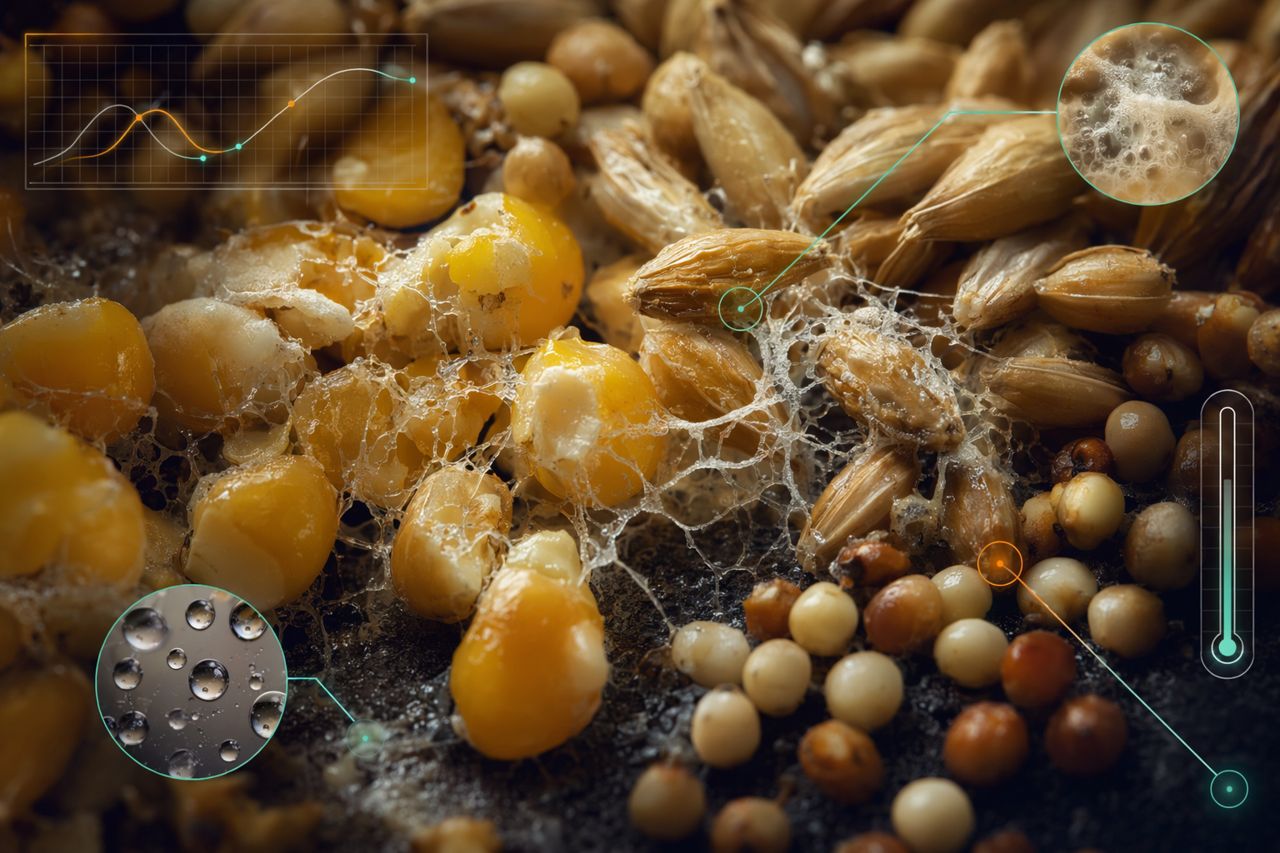
Cereal grains bring energy density to feed formulations, but their starch fraction can be difficult to manage consistently across milling, mixing, conditioning, and pelleting. Fungal Alpha-Amylase is designed for feed processors working with corn, wheat, barley, sorghum, rye, and mixed cereal streams where controlled starch modification can support processability and carbohydrate availability.
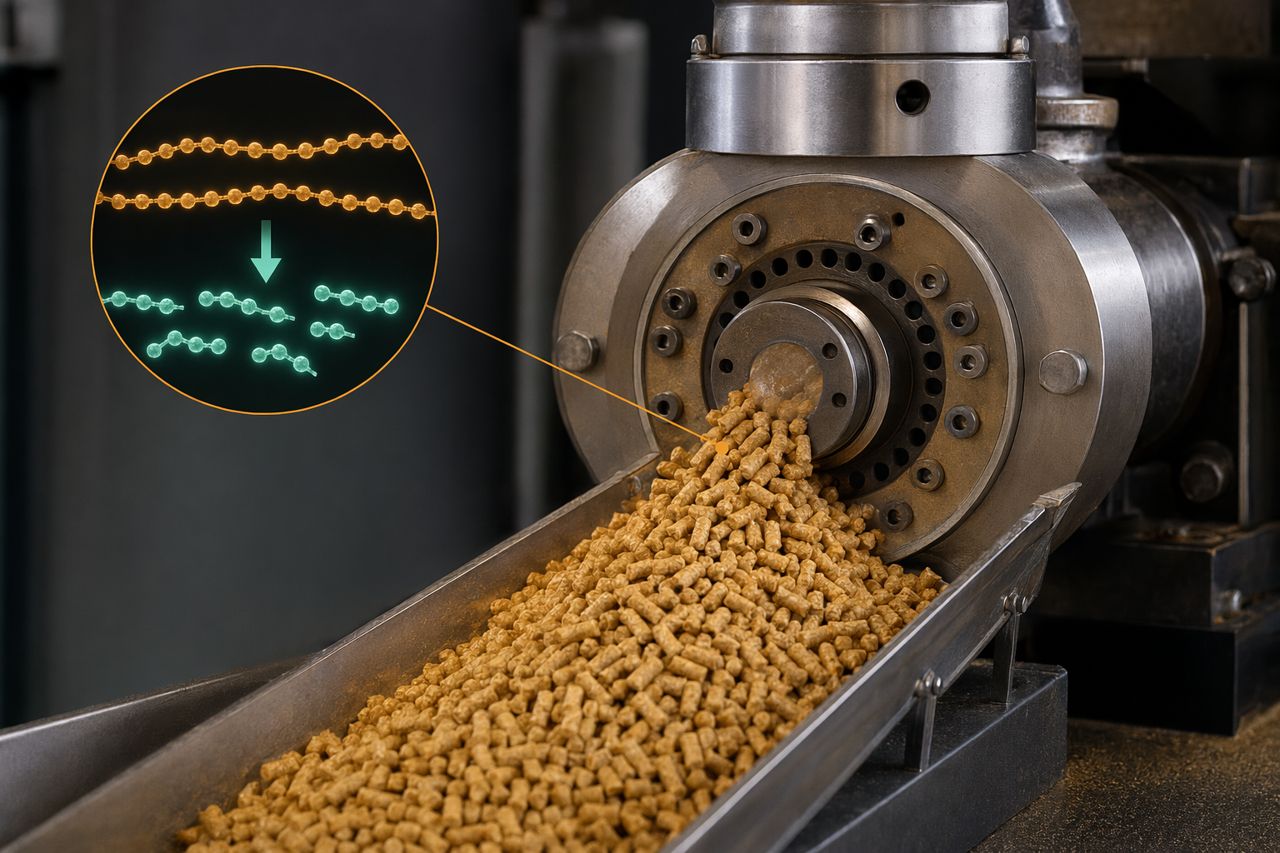
This enzyme acts on internal alpha-1,4 starch linkages, reducing larger starch molecules into shorter dextrins and fermentable carbohydrates. In practical terms, it can help formulators and production teams manage viscosity, improve exposure of cereal starch, and support more uniform feed processing in mash or pelleted formats.
Fungal Alpha-Amylase Solutions supplies fungal alpha-amylase in bulk to feed mills, premix and feed-additive manufacturers, integrators and the distributors who serve them. Supply is quoted per order: send the cereal base, the feed type, your volume and the destination.
Wholesale and bulk supply for manufacturers, distributors and resellers. Every fungal alpha-amylase order is quoted individually. Request a quote with the application, the quantity you need and the destination country.
What it helps solve
- Cereal starch variability between crop origins, grain lots, and milling profiles
- High-viscosity mash or slurry behavior in moisture-adjusted feed preparation
- Incomplete starch accessibility in dense cereal-based formulations
- Processing drag during mixing, conditioning, or pelleting where gelatinized starch becomes difficult to handle
- Formulation pressure where energy release and digestible carbohydrate contribution need tighter control
Application fit
Fungal Alpha-Amylase is suited for cereal-rich feed systems where enzymatic starch modification is desired before, during, or around thermal processing.
Common fit areas include:
- Poultry, swine, ruminant, aquaculture, and companion animal feed formulations
- Corn-, wheat-, barley-, sorghum-, and rye-forward recipes
- Mash feeds where controlled hydration and starch exposure are important
- Pelleted feeds where conditioning profiles influence starch gelatinization
- Premix or concentrate systems requiring enzyme compatibility planning
- Grain processing lines preparing cooked, steam-conditioned, or moisture-tempered feeds
Processing benefits
More manageable starch behavior
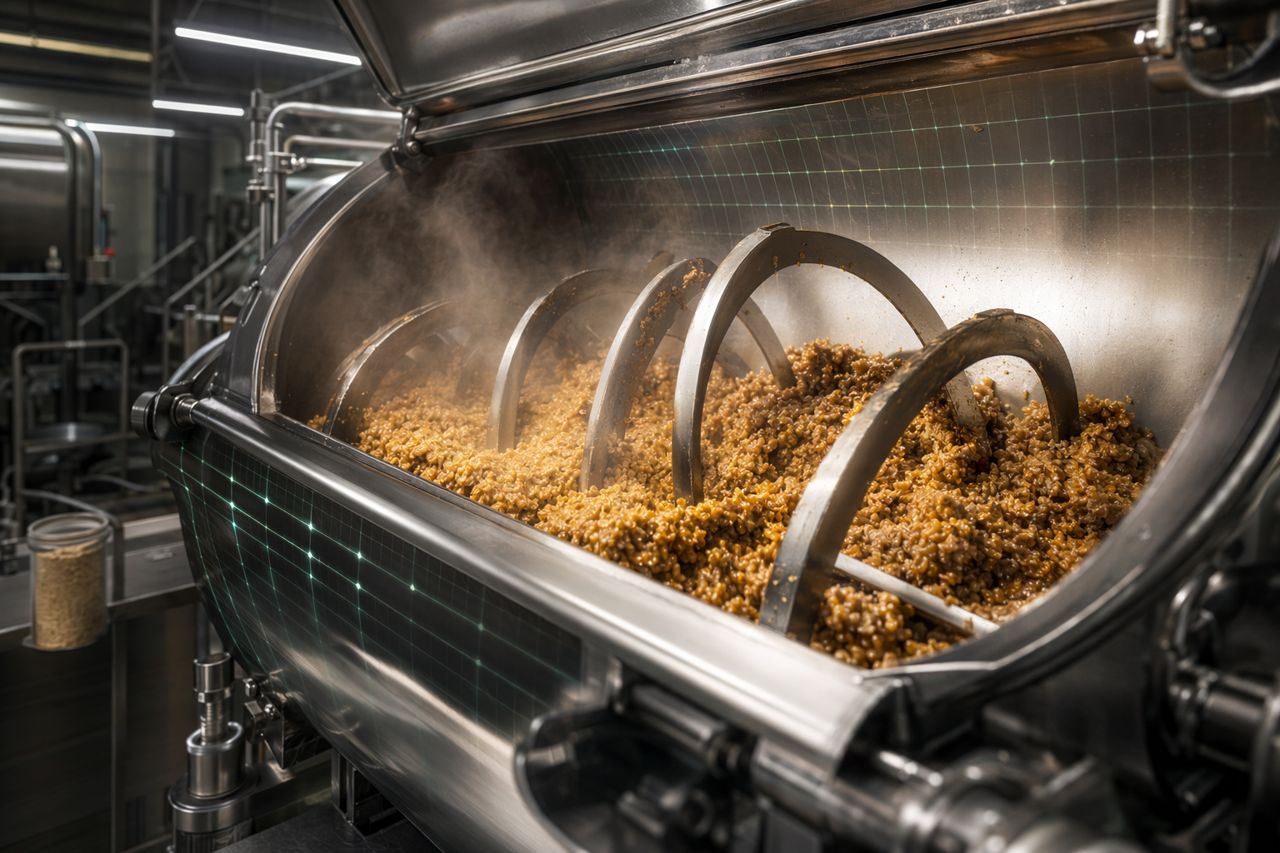
When cereal starch is hydrated and heated, it can thicken rapidly. Fungal Alpha-Amylase can help reduce this viscosity by shortening starch chains, supporting smoother flow, more even mixing, and better distribution of the formulated matrix.
Improved access to carbohydrate fractions
By partially hydrolyzing starch into shorter carbohydrates, the enzyme can support improved substrate accessibility. This is especially relevant where cereal starch structure, particle size, or processing intensity limits availability.
Support for consistent feed manufacturing
Feed mills do not run on ideal grain. Moisture, kernel hardness, starch damage, and particle size shift from lot to lot. Enzymatic starch modification gives process teams another control point for maintaining consistency across variable cereal inputs.
Better alignment with thermal steps
Fungal Alpha-Amylase performs best when used in a controlled moisture and temperature window. It is commonly considered where starch is hydrated and partially gelatinized, but before excessive heat exposure compromises enzyme function.
Performance window
Typical formulation work evaluates:
- pH environment: mildly acidic to near-neutral feed matrices are generally suitable
- Temperature exposure: best positioned before or during moderate thermal steps; high-heat pelleting may require process-specific validation
- Moisture availability: starch must be sufficiently hydrated for effective enzymatic action
- Contact time: longer residence time generally supports more complete starch modification
- Grain profile: wheat and barley systems may respond differently than corn- or sorghum-heavy systems due to starch and fiber structure
For heat-intensive lines, Fungal Alpha-Amylase Solutions can help evaluate whether the enzyme should be added earlier in the process, protected through formulation strategy, or considered alongside post-processing application options.
How production teams typically use it
- Define the target: viscosity reduction, carbohydrate availability, pellet quality support, or process consistency.
- Map the process: identify where grain starch is hydrated, heated, and mixed.
- Select the addition point: mixer, pre-conditioner, slurry stage, liquid application system, or premix route.
- Run a controlled trial: compare treated and untreated feed using your internal process and nutrition metrics.
- Refine inclusion: adjust around cereal type, moisture, temperature profile, and residence time.
Compatibility considerations
Fungal Alpha-Amylase is typically evaluated alongside other feed enzymes such as xylanase, beta-glucanase, cellulase, protease, phytase, and mannanase. Compatibility depends on pH, mineral load, processing temperature, premix carrier, and storage conditions.
For premix work, confirm:
- Carrier compatibility and segregation behavior
- Moisture control during storage
- Interaction with acids, salts, trace minerals, and choline sources
- Expected shelf life in the finished premix or compound feed
- Heat exposure during conditioning and pelleting
Product formats and handling
Available format selection may include powder, granular, and liquid options depending on the manufacturing route and handling preference. Selection should be based on addition point, dust control requirements, dispersion needs, premix compatibility, and thermal exposure.
General handling guidance:
- Store sealed in a cool, dry area
- Avoid prolonged exposure to humidity
- Prevent direct contact with strong oxidizers
- Use suitable respiratory and skin protection during powder handling
- Keep containers closed when not in use
Documentation available for qualified buyers
Fungal Alpha-Amylase Solutions supports procurement and technical review with standard commercial documentation, including:
- Product specification sheet
- Safety data sheet
- Allergen and origin statements as applicable
- Regulatory and compliance declarations relevant to the intended market
- Stability and handling guidance
- Packaging and lead-time information
When to choose Fungal Alpha-Amylase
Choose this enzyme when your feed process needs controlled starch modification rather than broad fiber breakdown alone. It is especially relevant when cereal starch behavior influences mash viscosity, pellet conditioning, carbohydrate availability, or line consistency.
It is not a one-size correction for poor milling, under-controlled moisture, or excessive thermal stress. It performs best when integrated into a defined processing window and validated against your own feed matrix.
Ready for a quote? Use the inquiry form at the foot of this page. Tell us the product or application, the quantity, your preferred format and the delivery country. We quote price and lead time per order and tell you which documents are available for that grade.
Request a quote or get pricing
Tell us your cereal base, feed type, processing route, and preferred format. Fungal Alpha-Amylase Solutions will respond with a practical recommendation and commercial pricing for your application.