Fungal Alpha-Amylase for Brewing Adjuncts and Mash Conversion
Fungal Alpha-Amylase for Brewing Adjuncts and Mash Conversion
Brewing and distilling teams use Fungal Alpha-Amylase to open cereal starch into shorter dextrins and fermentable sugar precursors during mash and adjunct processing. In practical terms, it helps make more of the grain bill available to yeast, supports smoother lautering and transfer, and gives production teams another control point when working with corn, rice, wheat, sorghum, barley adjuncts, or variable cereal inputs.
Fungal Alpha-Amylase Solutions supplies fungal alpha-amylase in bulk to breweries, distilleries, adjunct and brewing-syrup suppliers, and the distributors who serve them, where formulation consistency, clean handling and procurement reliability matter as much as enzyme performance. Every order is quoted individually: send the grain bill, the process stage, your volume and the destination.
Wholesale and bulk supply for manufacturers, distributors and resellers. Every fungal alpha-amylase order is quoted individually. Request a quote with the application, the quantity you need and the destination country.
What it does in the mash
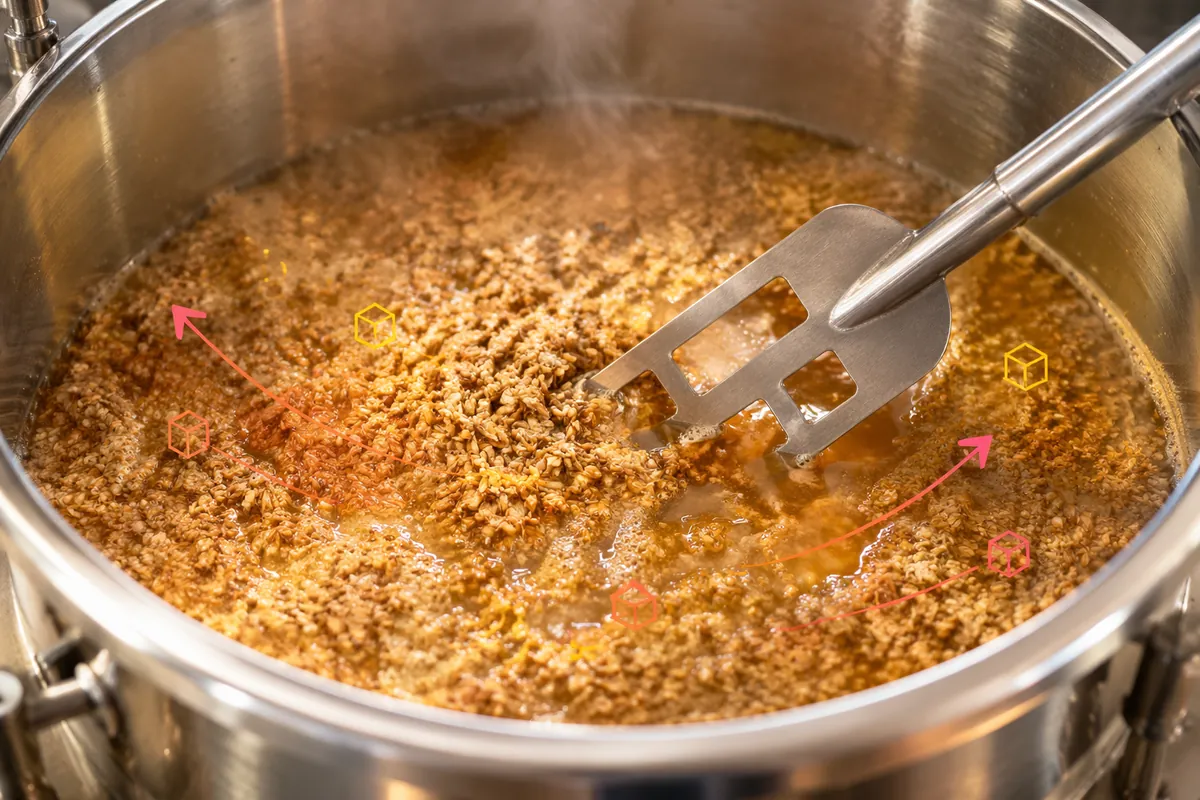
Fungal Alpha-Amylase hydrolyzes internal alpha-1,4 starch linkages, reducing starch viscosity and generating shorter carbohydrate chains for further conversion. In brewing and distilling, this is especially useful when adjunct starch needs controlled liquefaction and saccharification support without pushing the process into harsh thermal conditions.
Practical production benefits
- Improves adjunct utilization by helping convert cereal starch into accessible carbohydrates.
- Supports fermentability targets when paired with the right mash profile and complementary enzymes.
- Reduces mash viscosity for easier mixing, pumping, heat transfer, and downstream separation.
- Helps stabilize extract performance when raw material quality or adjunct ratio changes.
- Works in grain-forward processes where process teams need conversion support without excessive process disruption.
Where it fits
Beer production
Use Fungal Alpha-Amylase when brewing with adjuncts that require additional starch conversion support. It can help improve extract yield, maintain runoff behavior, and support wort composition targets when malt enzyme contribution is not sufficient for the grist design.
Typical fit areas include:
- High-adjunct lager brewing
- Rice or corn adjunct conversion
- Wheat-heavy grists with viscosity concerns
- Sorghum or alternative cereal brewing
- Adjunct cook streams before blending into main mash
Spirits and ethanol mashing
For distilling, Fungal Alpha-Amylase helps convert cereal starches into carbohydrates that can be further processed toward fermentable sugars. It is useful where consistent substrate preparation influences fermentation completeness, alcohol yield, and batch-to-batch repeatability.
Typical fit areas include:
- Grain whisky mash preparation
- Neutral spirit cereal processing
- Corn, wheat, rice, barley, and mixed-grain mashes
- Viscosity reduction before transfer or fermentation
- Adjunct streams requiring controlled starch breakdown
Performance window and process guidance
Fungal Alpha-Amylase is designed for acidic to mildly acidic mash environments commonly found in beverage production. It performs best when added at a point where starch is hydrated and accessible, and where the process temperature supports enzymatic action without rapid deactivation.
For best results, production teams should evaluate:
- Grain type and grind profile: Fine particles hydrate quickly but can increase viscosity and separation load.
- Gelatinization requirements: Some adjuncts need a cook or pre-treatment step before enzyme access is efficient.
- Mash pH: Keep the process in the enzyme’s working range and verify pH after adjunct addition.
- Hold time: Provide sufficient contact time for measurable viscosity reduction and starch conversion.
- Enzyme system design: Pair with glucoamylase, beta-amylase activity from malt, or other carbohydrate enzymes when final fermentability targets require deeper conversion.
Dose should be validated by pilot or production trials using your grist, water chemistry, mash schedule, and target fermentability. Fungal Alpha-Amylase Solutions can support practical dose screening and application fit discussions without requiring disclosure of confidential production recipes.
Application fit by production objective
Improve extract from adjunct-heavy grists
When adjunct inclusion rises, malt-derived enzyme contribution may not fully support the desired conversion profile. Fungal Alpha-Amylase can help close that gap by improving starch accessibility and dextrin formation.
Lower viscosity for better handling
High cereal solids, wheat-rich mashes, and certain alternative grains can create difficult rheology. Controlled alpha-amylase activity helps reduce mash thickness, improving agitation, pumping, transfer, and heat distribution.
Support consistent fermentation
Fermentation variability often begins upstream. By improving carbohydrate preparation in the mash, Fungal Alpha-Amylase helps create a more consistent substrate for yeast performance.
Build flexibility into raw material sourcing
Cereal lots vary. Adjunct quality, starch accessibility, protein content, and particle size all affect conversion. An enzyme-assisted mash program gives production teams more room to manage variability without rewriting the entire process.
Formulation and handling considerations
- Add only after adequate grain hydration for reliable enzyme contact.
- Avoid dosing into zones with poor mixing or excessive localized heat.
- Validate compatibility with any existing enzyme blend before scale-up.
- Confirm downstream quality targets, including attenuation profile, sensory impact, filtration behavior, and spirit yield.
- Store and handle according to the product documentation supplied with the batch.
Procurement notes
Fungal Alpha-Amylase Solutions supports B2B buyers with production-relevant documentation and clear commercial terms. Available documentation can include product specification, allergen and GMO status where applicable, safety information, country-of-origin details, and lot-level traceability documents.
For purchasing teams, we can discuss:
- Packaging format and order volume
- Lead time and repeat supply planning
- Trial quantities for process validation
- Export documentation requirements
- Batch documentation and quality release expectations
Ready for a quote? Use the inquiry form at the foot of this page. Tell us the product or application, the quantity, your preferred format and the delivery country. We quote price and lead time per order and tell you which documents are available for that grade.
Request pricing or application guidance
Tell us your grain bill type, process stage, and target outcome. Fungal Alpha-Amylase Solutions will respond with application-fit guidance and commercial pricing through this site’s own quote form.
Prefer a direct procurement conversation? Use the same form and select get pricing in your message so our team can route your request quickly.