Fungal Alpha-Amylase for Flour Mills and Improver Blenders: Flour Correction Supply
Fungal Alpha-Amylase for Flour Mills and Improver Blenders: Flour Correction Supply
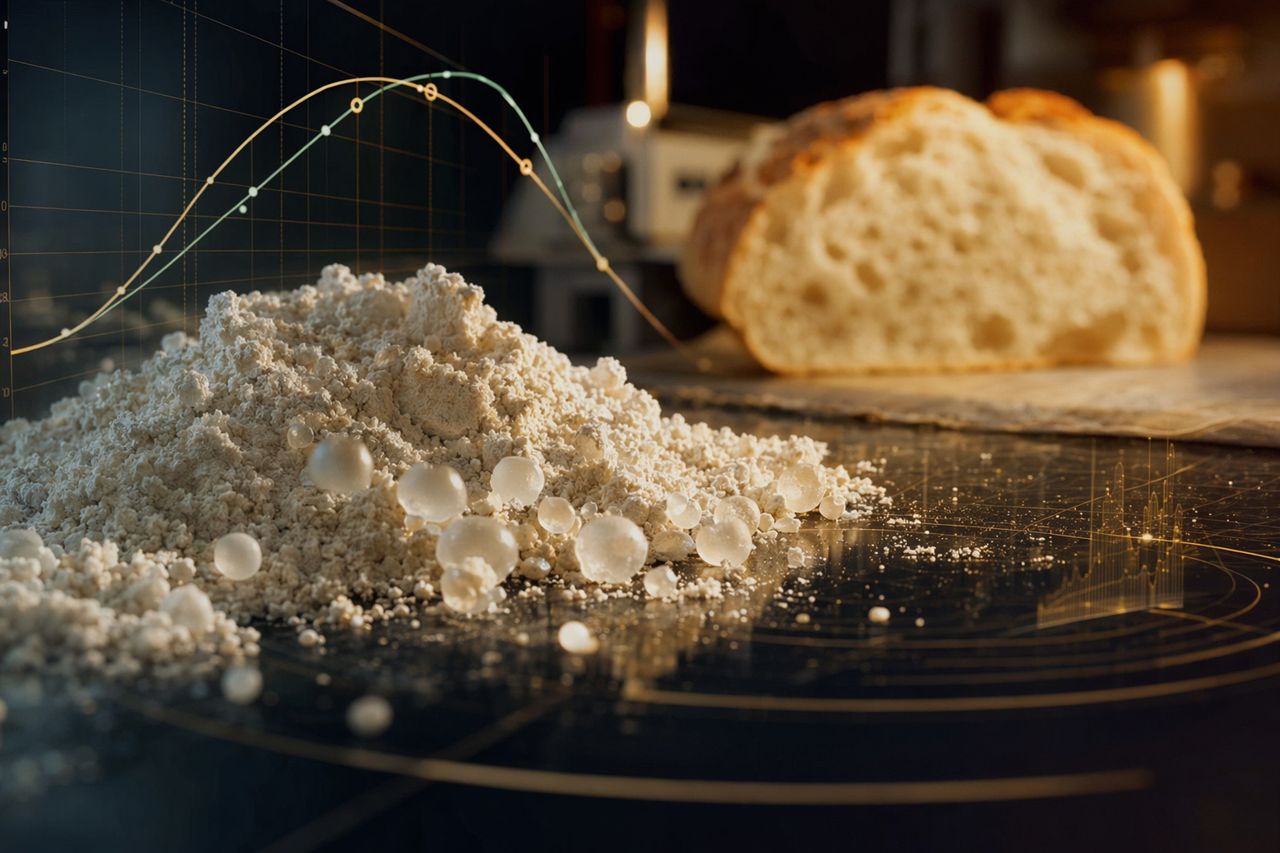
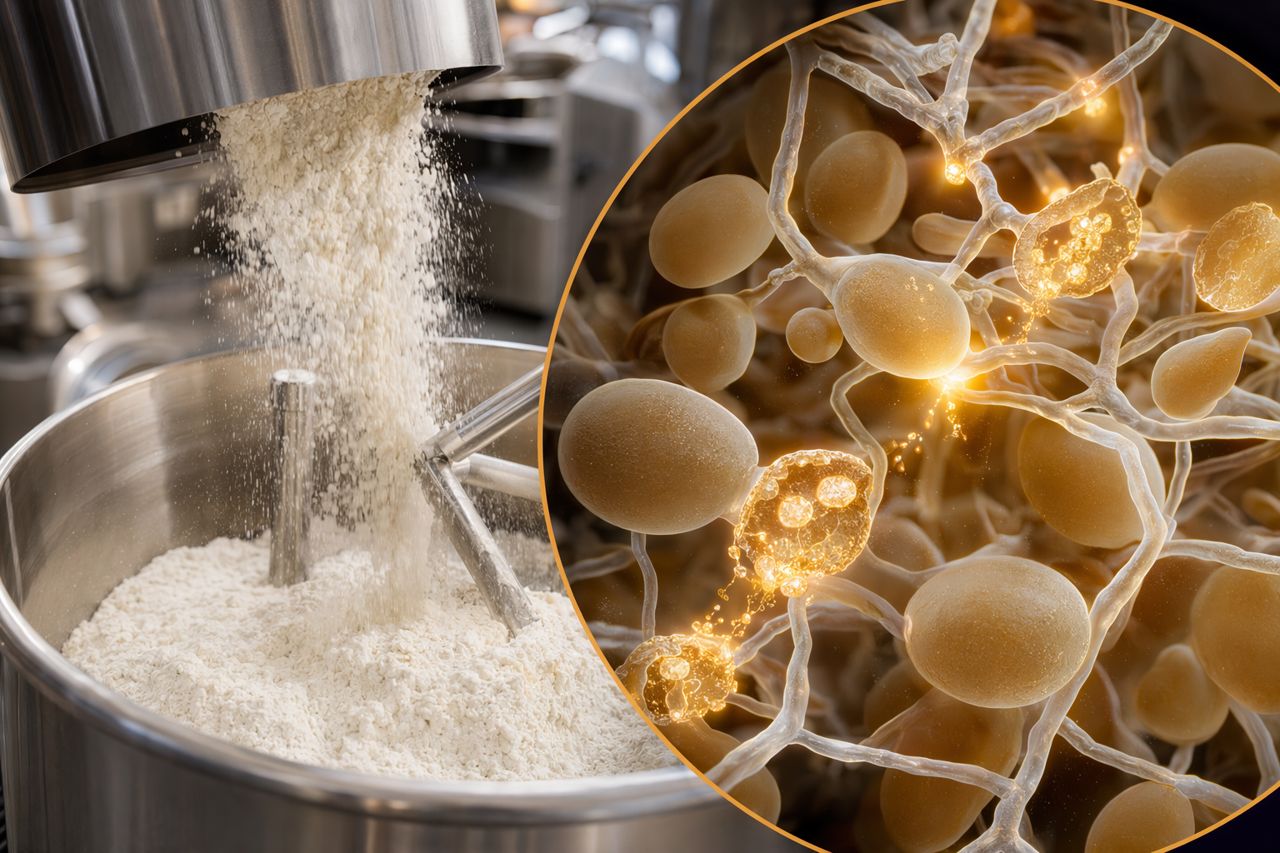
Flour performance moves. Crop conditions, milling settings, damaged starch level, absorption, and natural diastatic strength all influence how dough ferments and bakes. Fungal Alpha-Amylase gives bakery and flour-treatment teams a controlled way to increase starch conversion where it matters: during mixing, fermentation, proofing, and early bake.
Used correctly, it helps yeast access fermentable sugars, supports gas production, improves oven spring, encourages warm crust color, and contributes to a softer eating crumb. The goal is not aggressive liquefaction. The goal is predictable dough behavior and finished bread that meets specification more consistently.
Fungal Alpha-Amylase Solutions supplies fungal alpha-amylase in bulk to flour mills, flour-treatment and improver blenders, premix producers, industrial bakeries and the distributors who serve them. Supply is quoted per order: send the flour type or application, your volume and the destination.
Wholesale and bulk supply for manufacturers, distributors and resellers. Every fungal alpha-amylase order is quoted individually. Request a quote with the application, the quantity you need and the destination country.

What Fungal Alpha-Amylase does in dough
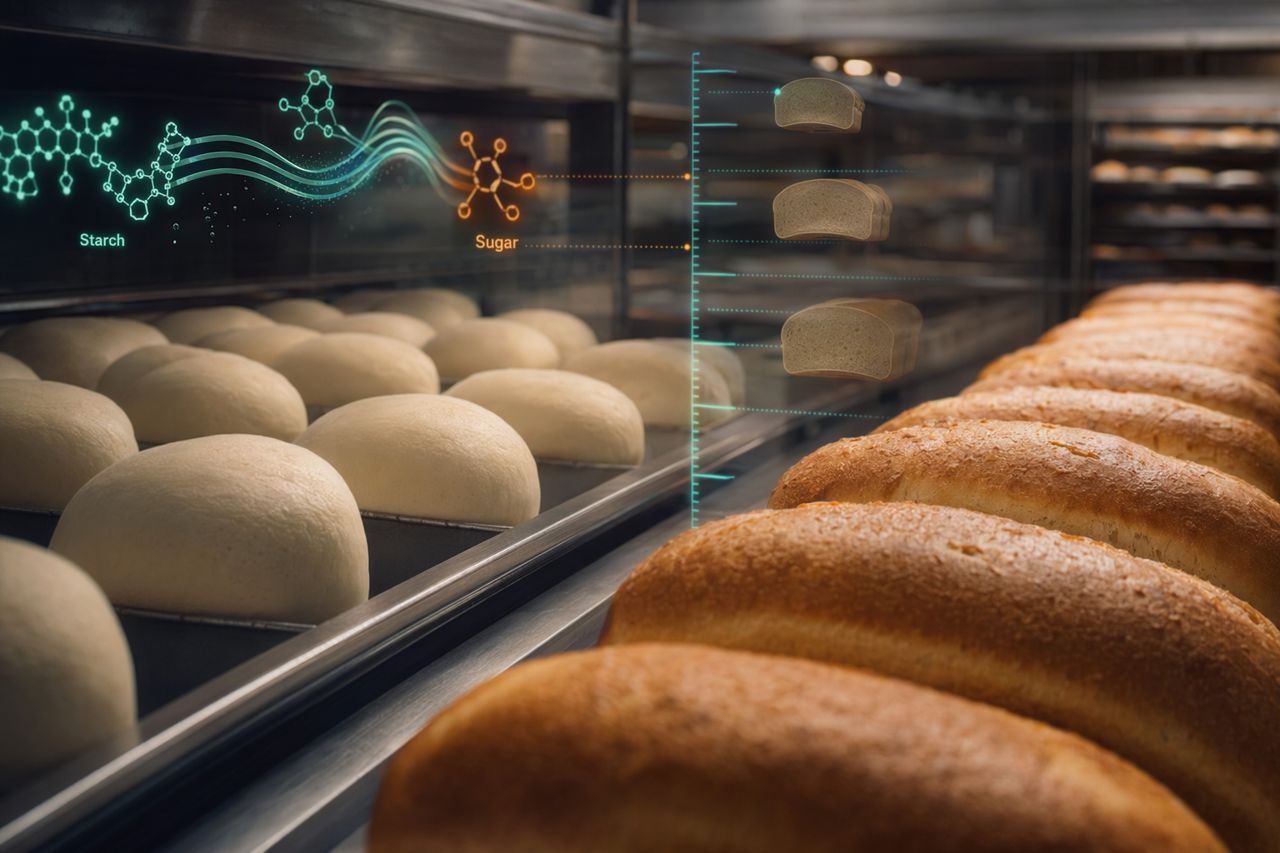
Fungal Alpha-Amylase acts on damaged and accessible starch, producing smaller dextrins and fermentable sugars that yeast can use. In bread and bun systems, that conversion supports:
- More reliable fermentation across variable flour lots
- Improved proof response and gas production
- Better loaf volume and oven spring
- More consistent crust browning through available reducing sugars
- Softer crumb texture and delayed firming in many formulations
- Cleaner flour correction when native amylase activity is low
Because it is fungal-derived and heat-sensitive relative to many cereal amylases, it is commonly selected for bakery use where controlled activity is preferred. It is designed to perform during dough processing and lose functional influence as baking progresses, helping reduce the risk of excessive post-bake crumb weakening when dosage and process fit are correct.
Where it fits best
Pan bread and sandwich bread
For high-throughput pan bread, Fungal Alpha-Amylase can help stabilize fermentation and volume when flour quality varies. It supports a more even crumb structure, improved sliceability, and more consistent crust shade across production days.
Hamburger buns, hot dog rolls, and soft rolls
In enriched or soft-roll systems, controlled starch conversion can support yeast activity and color development without relying only on added sugar. The result is a more dependable bake profile, especially when proofing time, dough temperature, and flour strength are tightly managed.
Flour correction and mill standardization
Mills and premix producers use Fungal Alpha-Amylase to correct low diastatic activity and bring flour closer to bakery performance targets. It can be incorporated into flour treatment blends, improver systems, or customer-specific bakery premixes.
Lean and hearth-style breads
In lean doughs, the enzyme can improve fermentation energy, crust tone, and volume while preserving a clean ingredient position. Bench validation is important because long fermentation, preferments, and high hydration can amplify enzyme effect.

Practical performance window
Fungal Alpha-Amylase is best evaluated in mildly acidic to near-neutral dough systems and conventional bakery processing conditions. Performance is influenced by flour damage, water absorption, fermentation time, dough temperature, sugar level, salt level, fat level, and the presence of other improver enzymes.
In practice, teams should evaluate it through bench bake and pilot runs using the same flour source, mixer energy, proof profile, and bake schedule used in production. Key indicators include:
- Dough handling and tack after mixing and proofing
- Proof height and gas retention
- Oven spring and final loaf volume
- Crust color uniformity
- Crumb grain, resilience, and slicing behavior
- Softness trend during storage
- Any sign of gumminess, collapse, or excessive stickiness
The right inclusion level is formulation-specific. Fungal Alpha-Amylase Solutions supports dosage strategy by application and processing objective, without publishing trader-confidential activity figures or assay methods.
Why flour lots behave differently, and where the enzyme fits
The same formula can give a different dough when the flour lot, the water, the dough temperature at the end of mixing, the mixing energy or a line stop changes. The result shows up as lower volume, a coarser crumb, sticky dough, slices that cling to the knife, or a crumb that is clearly firmer by the third day.
Flour carries its own variation: damaged starch, arabinoxylans, protein quality, the flour’s own amylase activity and its water absorption all move with the wheat, the milling and the storage. Fungal alpha-amylase is one of the tools that turns part of that variation into something a mill or a bakery can measure and adjust.
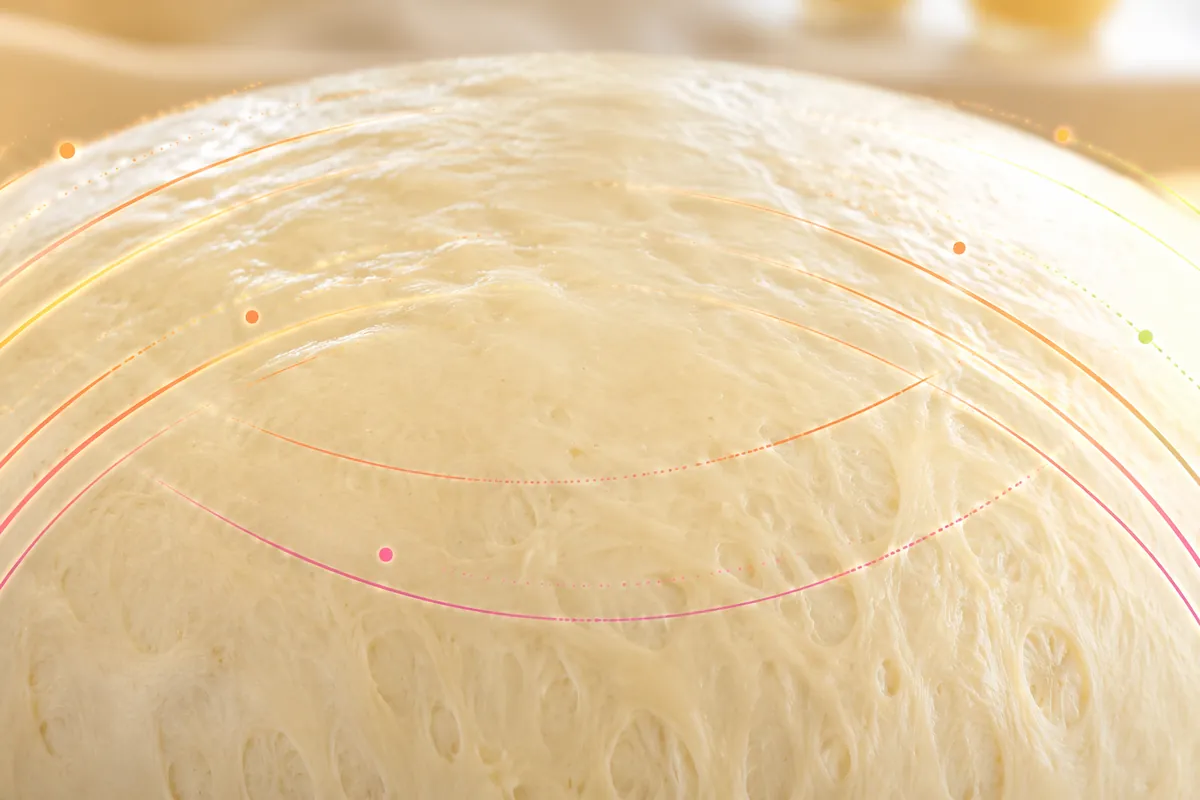
In the dough it works mainly on damaged starch. Once the bake gelatinizes the starch, far more substrate becomes available, and whether the enzyme keeps working then depends on how heat-stable it is. An overdosed or too heat-stable amylase leaves too many dextrins: sticky dough, a gummy crumb, slices sticking to the blade and unstable texture in storage.
Amylases in an improver are not interchangeable
Bakery amylases fall into four groups: fungal alpha-amylase, beta-amylase, maltogenic amylase and glucoamylase. Each works at a different stage and solves a different problem, so one cannot simply stand in for another.
- Fungal alpha-amylase drives fermentation, volume and even crust color. It is usually paired with xylanase to raise volume and improve the gluten network; keep the ratio in check, because over-hydrolysis damages that network.
- Maltogenic amylase, often combined with lipase and an emulsifier, is the anti-staling tool for short and long shelf-life bread.
- Glucoamylase only supports sugar release in special processes; used in the wrong place it gives a sticky crumb, collapse and unstable quality.
Two more points matter when you buy. Flour already contains its own amylase, so the added enzyme is a correction on top of what the wheat brings. And an enzyme name is not a dose: the same nominal enzyme with a different origin, heat stability or side activity can give a different result, so a replacement grade is never swapped one for one on its activity figure alone.
How to run a flour-correction trial that tells you something
- Define the result you want, and the results that must not get worse. If the aim is easier dividing, also watch stickiness on the line, collapse, open crumb and slicing.
- Keep a no-enzyme blank, your current solution and a ladder of candidate doses. In a blend trial, keep single-enzyme groups too, so you can see where any synergy comes from.
- Record every stage: dough temperature after mixing, stickiness, moulding, proof, oven rise, volume, cell structure, cooling, slicing and texture on the target day.
- Confirm on your real flour, equipment and line rhythm. A bench result shows the enzyme works under those conditions; only a production run shows it works on your line.
Firmer crumb, moisture migration and mould are separate problems. A softer loaf on day three does not mean a longer mould-free shelf life, and staling control does not replace hygienic cooling and packaging.
Formulation interactions to watch
Fungal Alpha-Amylase rarely works alone. Its value depends on the full improver system.
With fungal xylanase
Xylanase can improve dough machinability and volume by modifying arabinoxylans. When paired with Fungal Alpha-Amylase, the system may deliver stronger volume response and crumb softness, but over-treatment can reduce dough tolerance. Balance is critical.
With glucose oxidase
Glucose oxidase can strengthen dough handling and improve gas retention. This can be useful when amylase improves fermentation but the dough needs additional structure for processing stability.
With emulsifiers and softness systems
Fungal Alpha-Amylase can complement emulsifiers and anti-firming strategies by supporting crumb tenderness from the starch side of the system. It should be evaluated against both fresh bread quality and shelf-life targets.
With added sugar and malt ingredients
Where formulas already include sugar, malt flour, or malt extract, enzyme contribution should be adjusted carefully. The objective is controlled fermentation and browning, not excessive sweetness, dark color, or sticky crumb.
Selection criteria for bakery and flour teams
When specifying Fungal Alpha-Amylase for commercial bakery or flour correction, ask for more than a product name. Procurement and technical teams should align on:
- Application focus: bread, buns, rolls, flour correction, or premix
- Physical format and handling behavior
- Blend compatibility and dispersion in flour systems
- Heat sensitivity appropriate for baked goods
- Lot-to-lot consistency expectations
- Documentation for food manufacturing use
- Allergen, dietary, and certification requirements
- Packaging size, shelf-life, and storage guidance
- Technical support for plant trials and troubleshooting
Fungal Alpha-Amylase Solutions positions Fungal Alpha-Amylase as a production ingredient, not a commodity line item. The enzyme must match the flour, process, and finished-product standard.
Common production questions
Will it make dough sticky?
It can if the system is over-treated or if the flour and process already generate high fermentable sugar and dextrin levels. Correct inclusion, controlled fermentation, and process-specific validation reduce this risk.
Can it replace added sugar?
It may reduce dependence on added sugar for fermentation support and browning in some formulas, but it is not a direct one-to-one sweetener replacement. It changes starch conversion; the formulation still determines sweetness, color, and eating quality.
Is it only for weak flour?
No. It is often used when native amylase activity is low, but it can also help standardize otherwise acceptable flour across seasons and suppliers.
How should trials be structured?
Run side-by-side bakes against the current standard. Track proof behavior, loaf volume, crust color, crumb texture, slicing performance, and firmness over storage. Avoid changing multiple improver components at once unless the purpose is full-system reformulation.
Why Fungal Alpha-Amylase Solutions
Fungal Alpha-Amylase Solutions supplies Fungal Alpha-Amylase with a focus on application fit, procurement clarity, and bakery-relevant technical discussion. We help teams connect enzyme behavior to production outcomes: fermentation consistency, flour correction, volume, color, crumb, and shelf-life targets.
If your bakery or flour-treatment program needs a more controlled starch-conversion tool, Fungal Alpha-Amylase Solutions can help evaluate fit and quote the appropriate supply format.
Request a quote or get pricing
Ready for a quote? Use the inquiry form at the foot of this page. Tell us the product or application, the quantity, your preferred format and the delivery country. We quote price and lead time per order and tell you which documents are available for that grade.
Flour mills, improver blenders, bakeries and distributors can use the form below for pricing, availability and application guidance for fungal alpha-amylase in flour correction, improvers, bread, buns and rolls. Tell us the flour or product, your volume and the destination.